
Pavement Design
DISCLAIMER
Before purchasing, review the rules of your licensing or certifying entity. It is your responsibility to confirm this course meets your CE requirements. See the credit tab on the course page for details.
What’s Included: Full webinar recording, written course materials, expert instruction, a mandatory quiz, and a certificate upon completion.
Deliverability Timeline: All courses are generally available within 1-2 weeks after the live presentation.
CE Credits: AIA and/or LA/CES accreditation is available by request for courses recorded prior to March 11, 2026. All courses after that date include those accreditations by default, if applicable. With these accreditations, our courses qualify for credit in nearly all states for engineers, surveyors, architects, and landscape architects.
Learn more about the on-demand format in our FAQ or contact us at (715) 835-5900 or customerservice@halfmoonseminars.org
Agenda
Registration: 8:00 – 8:30 am
Morning Session: 8:30 – 11:45 am
Lunch (On your own): 11:45 am – 12:45 pm
Afternoon Session: 12:45 – 4:30 pm
Principles of Pavement Design
Goals of pavement design
• Smooth, stable surface and longevity
Terminology and basic components
• Pavement section
• Asphalt and concrete components
• Loading
Consulting guidelines and standards
Collecting data necessary for design
Economics and lifecycle analysis
Flexible Pavement Design
Soil support and subsurface preparation
Reclamation and recycling
Mixture content and pavement thickness
Preparing and overlaying existing pavement
Rigid Pavement Design
Soil support and subsurface preparation
Mixture content and pavement thickness
Preparing and overlaying existing pavements
Joint design
Maintenance and Rehabilitation
Goals
Distresses
Preservation techniques
Rehabilitation practices
Other Pavement Topics
Pavement drainage
• Water sources • Effects of water
• Surface/Sub-surface drainage • Water retention
Pavement management
• Condition assessment • Future conditions
• Project-level • Network-level
Credits
Architects
6.5 HSW Contact Hours
6.5 AIA HSW Learning Units
Professional Engineers
6.5 PDHs
Contractors
Non-Credit Continuing Ed.
Continuing Education Credit Information
This seminar is open to the public and offers up to 6.5 HSW continuing education hours to architects and 6.5 PDHs to professional engineers in all states. Educators and courses are not subject to pre-approval in Michigan.
This course has been approved by the American Institute of Architects for 6.5 HSW Learning Units (Provider No. J885).
HalfMoon Education is an approved continuing education sponsor for architects in Florida and is deemed an approved sponsor in New York. HalfMoon Education is an approved continuing education sponsor for engineers in Florida, Indiana, Louisiana, Maryland, New Jersey (Approval No. 24GP00000700), New York (NYSED Sponsor No. 35), North Carolina, and North Dakota.
This seminar offers contractors a non-credit continuing education opportunity; it has not been submitted to any state contractor licensing entity for continuing education approval.
Attendance will be monitored, and attendance certificates will be available after the seminar for most individuals who complete the entire event. Attendance certificates not available at the seminar will be mailed to participants within fifteen business days.
Speakers
Tyler Dawson, PhD PE
Vice President at NTH Consultants, Ltd.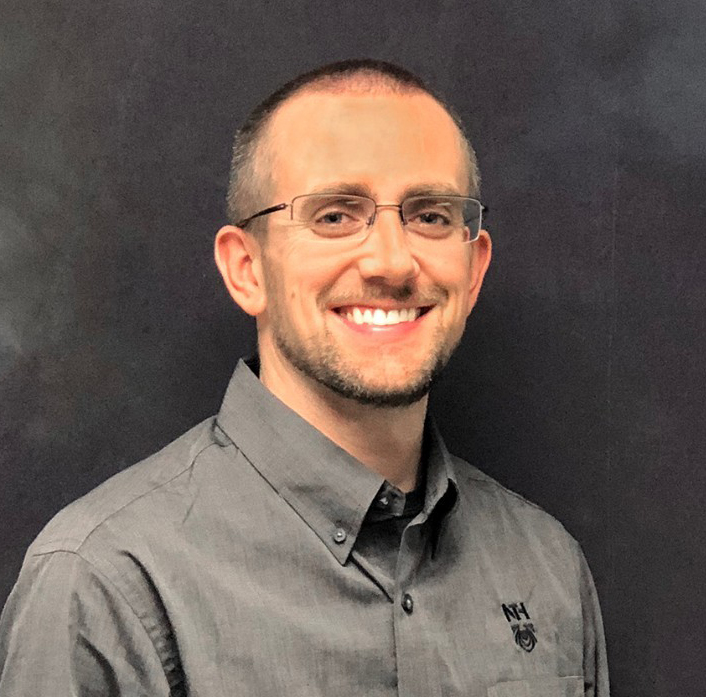 Dr. Dawson is in his 12th year as a pavement, geotechnical, and subsurface utility engineer with NTH Consultants, Ltd. (NTH). He has a wide background in pavement research, management, and design. He has completed research projects for the Michigan Department of Transportation (MDOT) and the Federal Highway Administration (FHWA) involving pavement design, material characterization, maintenance, and management. He has participated in and led numerous projects which have included pavement surface and structural evaluations, geotechnical explorations, subsurface utility engineering (SUE), and transportation utility coordination. Dr. Dawson’s geotechnical design experience includes earth retention, embankment, road sign and signal, ITS structure, bridge, and other deep and shallow foundations using LRFD and other techniques. He has also led several geophysical investigations to locate buried structures/utilities and subsurface voids.