
Geothermal Heating and Cooling: Technology and Applications
Agenda
Registration: 8:00 – 8:30 am
Morning Session: 8:30 am – 12:30 pm
Lunch (On your own): 12:30 – 1:30 pm
Afternoon Session: 1:30 – 4:30 pm
Applying the Laws of Thermodynamics to Geothermal Heat Pumps (GHPs) and Indoor Thermal Comfort
Applying the laws of thermodynamics to HVAC systems
Understanding the refrigeration cycle
Calculating heating and cooling loads
The effect of air flow and insulation
How comfort is measured
Understanding efficiency
Understanding Earth Loop Systems
The hidden assets of geothermal technologies
Solar energy in the Earth
Architecture of closed loop systems
• Horizontal ground loops
• Vertical ground loops
• Direct exchange systems
• Thermal load sharing
• Mini-grids
Applications for open loop (Class V Thermal Exchange) systems
• Single well
• Two-well systems
Evaluating topography
Measuring soil conductivity
Environments for ground-loop systems: beneath yards, fields, parking lots, and buildings
Designing Geothermal Systems
Determining loop type
Making heat loss calculations
Sizing the unit
Sizing the loop
Writing a request for proposal (RFP)
Writing a driller specification
HS2 hydronic design software
Choosing System Type
Distributed GHPs or chiller plants
Basic components of geothermal heat pump (GHP) systems:
Pumps, condesor water piping, heat pump, heat exchanger
Forced air systems
Hydronic systems
Domestic hot water options
Geothermal swimming pool heaters
Evaluating the Benefits of Geothermal Systems
Incentives to use geothermal
Geothermal utilitiesMeasuring performance
Calculating savings and cost
Environmental benefits
Tax credits, incentives and rebates
Property assessed clean energy (PACE)
State-based legislation
Maintaining Geothermal Systems
Performing routine maintenance on GHPs
Loop maintenance (automatic or periodic)
Pump maintenance/monitoring
Credits
Architects
6.5 HSW CE Hours
6.5 AIA HSW Learning Units
Engineers
6.5 FL Area of Practice CE Hours
6.5 PDHs Outside of Florida
Continuing Education Credit Information
This seminar is open to the public and offers 6.5 continuing education hours to architects and engineers in all states.
HalfMoon Education is an approved continuing education provider for Florida architects (Provider No. 0001388; License No. PVD394), and the American Institute of Architects has approved this event for 6.5 HSW Learning Units (Provider No. J885).
HalfMoon Education is an approved continuing education provider for Florida professional engineers (Provider No. 0004647). This course qualifies for 6.5 Area of Practice continuing education hours.
HalfMoon Education is deemed an approved continuing education sponsor for New York architects via the AIA and is an approved continuing education sponsor for engineers in Indiana, Louisiana, Maryland, New Jersey, New York (NYSED Sponsor No. 35), North Carolina, and North Dakota.
Attendance will be monitored and reported, as required. Attendance certificates will be available after the seminar for most individuals who complete the entire event. Attendance certificates not available at the seminar will be mailed to participants within fifteen business days.
Speakers
Jay Egg, CMC
Egg Geo, LLC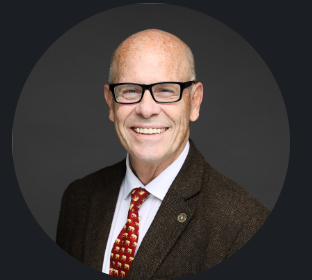 After serving in the US Navy nuclear power field, Jay Egg began a career in mechanical design engineering & contracting. Now, as an expert consultant, Jay sits on several technical code committees internationally; notably the technical committee for the IAPMO Uniform Mechanical Code. Jay has co-authored two McGraw-Hill Textbooks focused on geothermal HVAC technologies and continues to write curriculum and lecture on the merits of Clean Heating and Cooling technologies.